Awareness
10 Signs Your Aging Parent Is Lonely (and What to Do)
The signs are quieter than you'd expect. Here's what to listen for, what to look for, and the one habit that catches loneliness early.
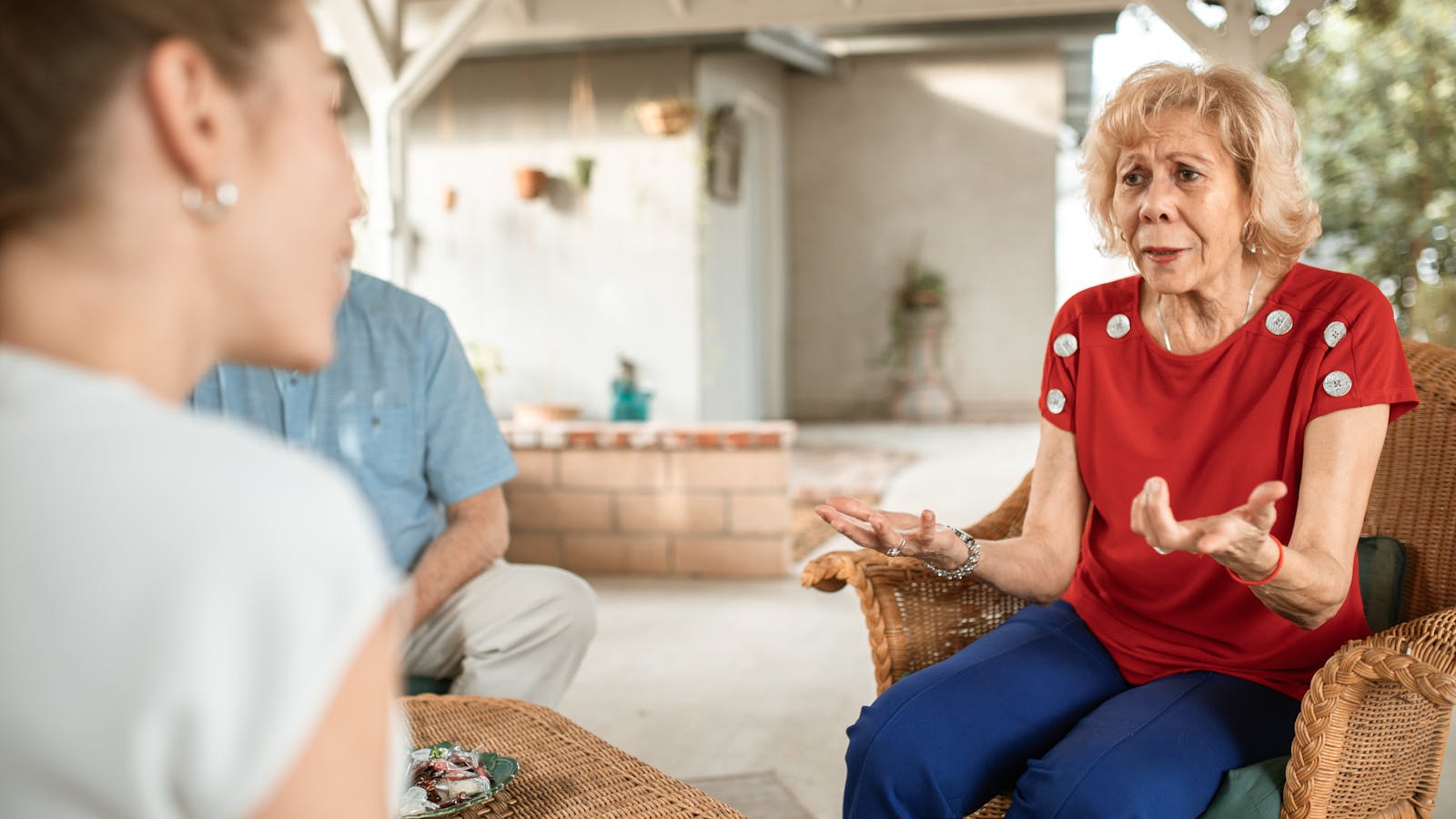
You hung up the phone on Sunday and something felt off. Your mom said she was fine. She said the right things about her week. But the texture was wrong. The voice didn't quite match the words. By Wednesday you can't remember whether you should be worried.
Loneliness in an aging parent rarely announces itself. It leaks out through small signals that are easy to miss on a five-minute call. The signals aren't hidden. They're just quiet.
This post is ten of them, grouped by what you'll hear, what you'll see, and what's changing in their week. Plus three specific things you can do this week, regardless of whether your parent ever uses the word "lonely" out loud.
Loneliness is a health condition, not a mood
Lonely older adults aren't just sad. They're at materially higher risk for heart disease, cognitive decline, and earlier death.
Almost one in five Canadians aged 65 and older report experiencing loneliness, according to the Canadian Health Survey on Seniors 2019/2020. The breakdown matters: 23% of older women report loneliness, compared with 15% of older men. By marital status, the numbers climb steeply: 31% of widowed Canadians 65+, 32% of separated or divorced, 29% of never-married, against 13% for those married or in a common-law relationship.
The U.S. Surgeon General issued a public-health advisory in 2023 making the case that the mortality impact of social disconnection is "similar to that caused by smoking up to 15 cigarettes a day." That isn't metaphor. It's a number drawn from meta-analyses of long-term cohort studies.
The American Heart Association's 2022 scientific statement put hard numbers on it: a 29% increase in heart-disease risk and a 32% increase in stroke risk associated with social isolation and loneliness.
So when you notice your parent sounding off, you're not overreacting. You're looking at a health signal that has been hiding in plain sight for years. The signs below are how it shows up in normal life, before anything dramatic happens.
What you'll hear: signs in conversation
The fastest signal isn't what your parent says. It's the rhythm of how they say it. Loneliness shows up in small conversational tells before it shows up in words.
1. "I'm fine" sounds rehearsed. Most parents protect their adult kids from worry, so they have a stock answer ready. Listen for when "I'm fine" arrives a beat too quickly, with the same exact phrasing every week, and no follow-up detail. The defensiveness in that single phrase is information.
2. They tell the same story twice in one call. Not necessarily memory loss. Often loneliness. When you have nobody to tell things to during the week, the stories stack up and lose their order. If your dad tells you the same thing he told you ten minutes ago, write it down. If it keeps happening, that's a pattern worth flagging to his doctor.
3. They mention a specific friend or neighbour who's no longer around. "I haven't seen Helen since she moved." "Frank doesn't come to the diner anymore." When the same name keeps coming up unprompted, your parent is naming the absence that's loudest in their life right now. Ask about the person, not about how your parent feels. The story will tell you plenty.
4. They don't ask about your kids or work the way they used to. This one stings, because it can feel like rejection. It isn't. When loneliness narrows your world, it gets harder to hold other people's lives in your head. The follow-up questions go first. The genuine curiosity goes second.
What you'll see: signs around the house
A weekly visit catches what phone calls can't. Lonely homes look different: quieter, less lived-in, with patterns that drift over weeks.
5. The TV is on whenever you visit (or whenever they answer a video call). TV as company is one of the most common loneliness signals older adults report. It's not the watching. It's the needing-it-to-be-on. Pay attention to whether your parent turns it off when you arrive, or leaves it murmuring in the next room the whole time.
6. The mail is piling up unopened. Bills, cards, flyers all in a stack. This is sometimes early cognitive change, but more often it's the loss of any reason to deal with the day. When the calendar empties out, the mail stops feeling urgent.
7. The fridge has more frozen meals than fresh food. Cooking for one is harder than people who haven't had to do it expect. Frozen meals expand to fill the freezer when nobody is coming for dinner. If you used to find leftovers and now you only find packaging, that's information.
8. The plants are doing worse than last time. Not a joke. Houseplants are a small daily ritual: water, sun, dead leaves trimmed. When that ritual quietly slips, it's often because the energy required for daily small things has dropped. The plants are the canary.
What's changing: signs in habits
The strongest signs are changes from your parent's own baseline, not comparisons to other people. Track what's shifted in the last three months.
9. They've stopped going to their usual spots. The bridge club, the church, the diner, the walking group. Loneliness compounds: once people stop going, going back gets harder. If your mom used to have a Tuesday-morning thing and now she doesn't, ask her gently what happened. Often the answer is "I just got out of the habit," which is the loneliest sentence in the language.
10. They're sleeping more, or far less, than they used to. Both directions matter. Sleeping ten hours a day and still tired is one pattern; lying awake at 3am every night is another. Sleep change is also a depression signal, so this is one to mention to their family doctor specifically.
I don't have a Canadian study that proves changes-from-baseline catch loneliness earlier than checklists. But after talking to dozens of adult children whose parents got lonely and then got worse, I keep hearing the same thing: the daughter who noticed something was off three months before everyone else was the daughter who knew what "normal" looked like for her mom. Knowing the baseline is half the work.
What to do this week
Three concrete moves. None of them require a hard conversation with your parent. None of them require a diagnosis.
Lower the bar for hearing about small things. Tell three people around your parent (a neighbour, a sibling who lives closer, a friend who still drops by) some version of: "If anything feels off, text me. It doesn't have to be a big deal. I would rather hear five small things that turn out to be nothing than miss one thing that turns out to be something." Most people don't reach out because they don't want to alarm you. Give them permission.
Get a weekly set of eyes in the home. This is the single most useful move for loneliness in an aging parent. Not because of what gets done in the visit, but because of what gets noticed. A neighbour, a sibling, a trusted visitor. The title doesn't matter. The regular eyes do. Weekly is the right cadence: long enough to see change, short enough to catch it early.
Set a baseline now. Spend 20 minutes one weekend writing down what's normal for your parent right now. How many hours a day are they alone? When do they go to bed? Who visits, and how often? What are they excited about this month? Put it in a shared note you can update. In six months you'll be glad you wrote it down. The deeper version of this system is in our long-distance caregiving post.
If you take away one thing
The single most useful sign is change from baseline, and the single most useful habit is a weekly visitor in the home.
Everything else in this post is supporting infrastructure around those two things. The signs help you spot what's shifted. The weekly visit catches it. The baseline note tells you what counts as shifted in the first place.
If your parent doesn't have someone in their home every week, that's the first thing to fix. This week.
If you'd like the longer playbook on building a long-distance care system, our post on keeping eyes on mom is the place to start.
About the author
Daniel Olaleye is the founder of Halekin, a Canadian companion-care service that matches families with trusted Kin who visit their loved ones weekly. He writes about long-distance caregiving, aging in place, and what families actually need from a companion. Reach him at founder@halekin.com.

Awareness
Why Your Parent Says "I'm Fine" When They're Not
"I'm fine" from an aging parent is rarely literal. Here's what it's most often hiding, and the questions that get past it.
7 min read

Awareness
What Happens When Seniors Stop Socializing
When an older parent pulls back from the bridge club, the consequences cascade. Here's what the research says actually changes.
6 min read
Awareness
Long-Distance Caregiving: A Guide for Canadian Families
About 360,000 Canadians help an aging parent who lives at least an hour away. Here's the system that actually works.
11 min read