Awareness
Why Do Seniors Eat Alone? The Hidden Epidemic
Almost a third of Canadian women over 65 live alone. The meal isn't the problem; what stops happening around it is. Here's what to know.
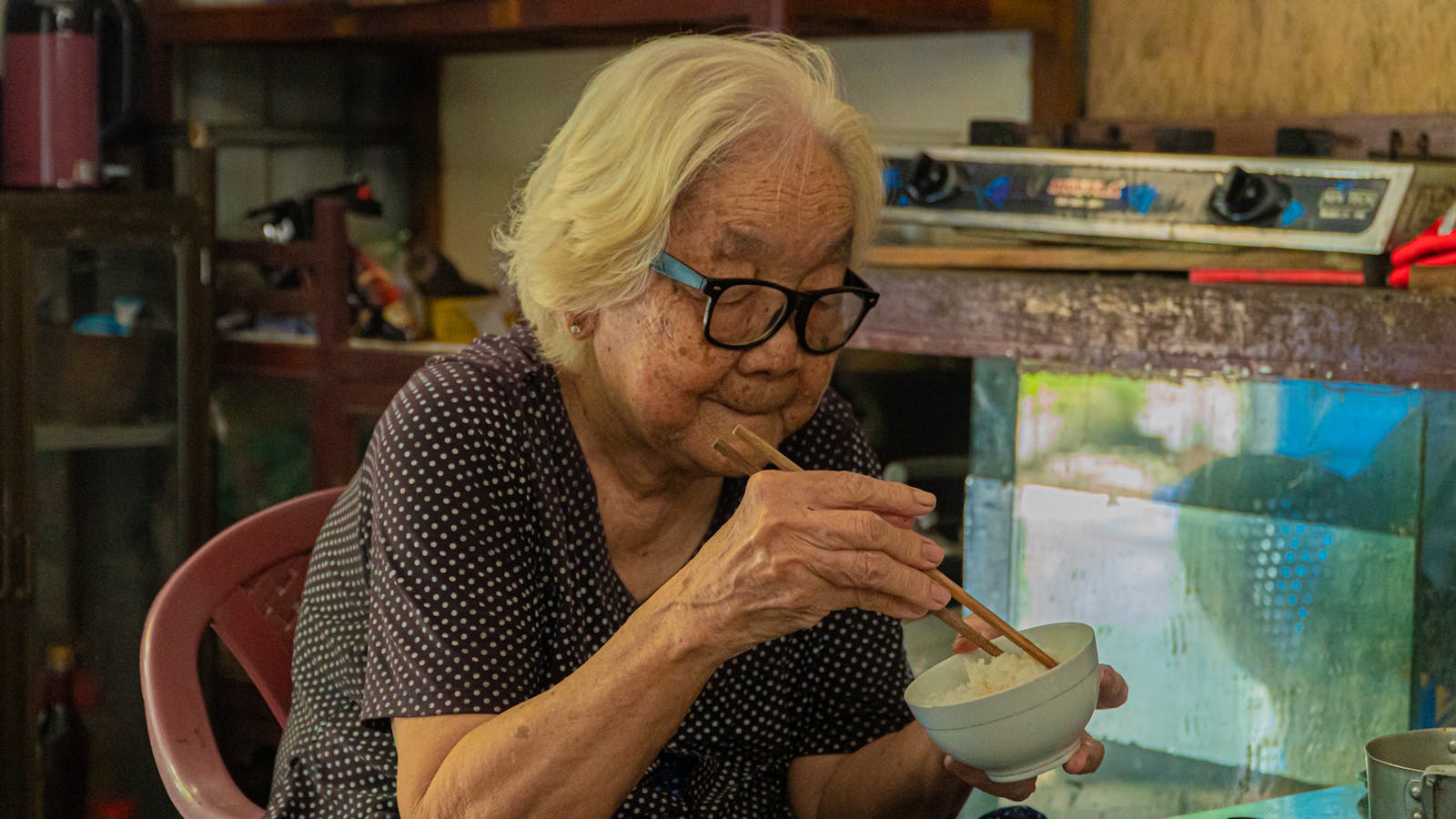
Your dad lost your mom three years ago and he says he's fine. He's on top of his bills. He still drives. When you ask what he ate yesterday he tells you about the chicken your sister dropped off on Sunday. You're standing in his kitchen on Tuesday. The chicken is still in the fridge, mostly untouched. He's been eating cereal twice a day for four months.
This is one of the most common moments adult children describe. Not a dramatic decline. Just a quiet drift toward eating less, less often, and almost always alone.
In Canada, eating alone has become the default condition of older life. The numbers are not subtle. Neither is the health impact. But the topic gets less attention than dementia, less than falls, less than housing. It happens slowly. It happens at home. Nobody calls about it.
This post is about why it's a problem worth taking seriously, and what one shared meal a week actually does.
The scale isn't hyperbole
Almost a third of Canadian women over 65 and roughly one in six men over 65 live alone, according to the most recent detailed Statistics Canada analysis. Those numbers climb steeply with age: 42% of Canadians 85 and older live alone, per the 2021 census. Among older women living alone in 2016, 60% were widowed.
Living alone doesn't equal eating alone, but it's a strong proxy. Most meals happen at home. A 2017-2018 Statistics Canada study of nearly 40,000 older Canadians living alone makes the link plain: solo households are where most older Canadians eat, and where most older Canadians eat by themselves.
The U.S. Surgeon General called loneliness "an epidemic" in his 2023 advisory, with a mortality impact "similar to that caused by smoking up to 15 cigarettes a day." That framing applies here too. Eating alone isn't the cause of loneliness; it's how loneliness shows up several times a day, every day, for the people most exposed to it.
The hidden part isn't the data. The data is fine. The hidden part is that nobody flags it. Your mom isn't going to call you to say "I ate cereal again."
Why eating alone isn't really about the meal
The meal isn't the problem. What disappears around it is.
Three things vanish when an older adult starts eating alone. The conversation that paced the meal and gave it a reason to last 30 minutes instead of seven. The accountability of having somebody else at the table who notices you're only eating half. The reason to cook, which is mostly other people. Cooking for one is a chore most adults of any age would skip if given the choice.
The food gets simpler. Cereal. Toast. A piece of cheese. The plate gets emptier. The amount eaten drops, often without anyone noticing, because nobody is tracking the difference between "a bowl of soup" and "two-thirds of a bowl of soup three days in a row."
Researchers call the social side of eating "commensality." It sounds clinical, but the basic claim is intuitive: humans evolved to eat together. The plate, the company, and the conversation are one thing. Pull two of them apart and the third one suffers.
Why so many older Canadians eat alone in 2026
Two forces, both decades in the making.
The demographic shift. More older Canadians live alone now than at any point in our history. Women outlive men by an average of four years. Most older Canadians who live alone are widowed (especially women) or never-married. None of those numbers are trending down.
The cultural shift. Multigenerational households were common in Canada into the 1960s. They aren't now, except in some immigrant-Canadian families that still hold the older pattern. Sunday dinners thinned out. The drop-in niece moved to Calgary. The neighbours your mom used to walk with retired and moved south for winter. The everyday social scaffolding that used to surround a meal isn't replaceable by a daily phone call.
There's also money. Food insecurity among older Canadians rose from 8% in 2019 to 12.6% in 2023, according to the National Institute on Ageing. When the budget is tight, the first thing that disappears is variety, then quality, then quantity. An older Canadian eating one meal a day from a $5 frozen entrée is also eating alone.
I don't have Canadian data showing that even one shared meal a week meaningfully extends the life of an older Canadian. The longitudinal studies on this come from Japan and Korea, where the question gets more research because more older adults still live in multigenerational households. But the directional evidence is hard to ignore, and the experience of every family we've talked to lines up with it.
What changes when even one meal is shared
A single shared meal a week changes more than seems plausible.
The plate fills up. A scoping review across multiple studies documented that older adults eat up to 60% more food when eating with familiar others, a phenomenon researchers call "social facilitation of eating." Variety improves. Vegetables and protein go up. The "I'll just have toast" default doesn't hold when somebody else is there.
The mood lifts. Older adults living alone who also eat alone are at materially higher risk of depressive symptoms. The longitudinal JAGES study from Japan found older men who lived alone and ate alone were 2.36 times more likely to develop depression than peers who ate with others. Subsequent reviews have replicated the directional finding across populations.
The day gets a shape. Older adults who anticipate a regular meal with someone use the rest of the day differently. The morning has a thing in it. The kitchen gets cleaned. The fridge gets restocked. The "I just got out of the habit" drift, which is the hardest one to reverse, doesn't set in.
The meal doesn't have to be elaborate. Tea and a sandwich counts. The point is the company, eaten slowly, with somebody who notices what's actually getting eaten.
If you take away one thing
The most useful change you can make for an older parent who eats alone isn't a vitamin, a meal-delivery subscription, or a new diet. It's one shared meal a week, with the same person, at roughly the same time.
Everything else here is supporting evidence for that one move. The day has a shape. The plate gets fuller. The mood lifts. And the person sitting across from your parent is the quiet early-warning system you wouldn't otherwise have.
If your mom or dad doesn't have a standing weekly meal with somebody, that's the gap to fill first. This week.
If you'd like the longer playbook on building a long-distance system around your parent's week, our 10 signs your aging parent is lonely and long-distance caregiving guide are the next places to read.
About the author
Daniel Olaleye is the founder of Halekin, a Canadian companion-care service that matches families with trusted Kin who visit their loved ones weekly. He writes about long-distance caregiving, aging in place, and what families actually need from a companion. Reach him at founder@halekin.com.
Awareness
What Happens When Seniors Stop Socializing
When an older parent pulls back from the bridge club, the consequences cascade. Here's what the research says actually changes.
6 min read
Awareness
10 Signs Your Aging Parent Is Lonely (and What to Do)
The signs are quieter than you'd expect. Here's what to listen for, what to look for, and the one habit that catches loneliness early.
8 min read
Awareness
The Real Cost of Senior Loneliness (It's Not Just Emotional)
Loneliness in older adults is a documented health and dollars cost. Here's what the research actually says it adds up to in Canada.
7 min read